Redragon M602 Gaming Mouse vs Redragon M810 Pro Wireless Gaming Mouse
Two of our picks from Best Gaming Mice for the Money, compared side by side on the specs and trade-offs that actually matter.
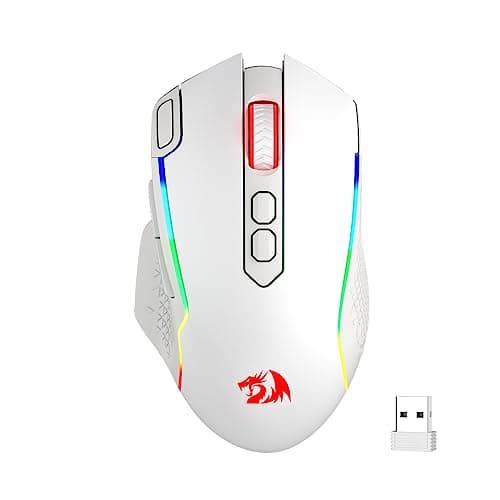
![Redragon M602 Gaming Mouse, Ergonomic RGB Gaming Mouse Wired with 7200 Adjustable DPI, 9 Programmable Buttons, Professional Software for Gamer Office [White]](/_next/image?url=https%3A%2F%2Fm.media-amazon.com%2Fimages%2FI%2F31RLs9r7T8L._SL500_.jpg&w=3840&q=75&dpl=dpl_5MTuSCcPM2kzNQrRHDh25YjtWuXK)
Specs head to head
| Spec | Redragon M602 Gaming Mouse | Redragon M810 Pro Wireless Gaming Mouse |
|---|---|---|
| Sensor | Optical (up to 7200 DPI class) | PixArt PMW3325 |
| Max DPI | 7200 | 10000 |
| Weight | 130 g | 111 g |
| Shape / Size | Right-handed ergonomic, palm grip | Larger right-handed ergonomic |
| Connection | Wired (1.8 m braided cable) | Wireless 2.4 GHz, plus USB-C wired |
| Polling Rate | 1000 Hz | 1000 Hz |
| Buttons | 8 programmable (5 onboard profiles) | n/a |
| RGB | Yes, multiple backlight modes | n/a |
| Street price (approximate) | Approximately 20 USD | Approximately 40 USD |
| Switches | n/a | HUANO (20M clicks) |
| Battery | n/a | Up to 45 hours (eco mode) |
Our take on each
Redragon M602 Gaming Mouse
Best for: Budget palm-grip gamers who want an ergonomic right-handed shape and plenty of buttons without spending real money.
The Redragon M602 Griffin is the classic answer to wanting a gaming mouse with only twenty dollars to spend. It pairs a contoured, right-handed ergonomic shell with a thumb rest and grippy scroll wheel, and for the money the build feels surprisingly solid.
The sensor tops out at 7200 DPI with handy on-the-fly steps and five onboard profiles, each tied to its own LED color so you always know which one you are on. Tracking is perfectly fine for casual and even mid-tier competitive play. It will not embarrass itself in your daily games.
The catches are predictable at this price. At around 130 grams it is heavy, the body is glossy plastic that picks up fingerprints, and Redragon's software is dated and clunky. But as a no-risk first gaming mouse, it overdelivers.
Redragon M810 Pro Wireless Gaming Mouse
Best for: Palm and claw-grip gamers who want a larger wireless mouse with macros and rapid-fire without paying flagship prices.
The Redragon M810 Pro Taipan delivers the one feature people pay the most for, true wireless, at a price that feels like a typo. It runs on a 2.4 GHz nano receiver with a 1000 Hz polling rate, and drops to USB-C wired whenever you want zero-compromise latency.
The PixArt PMW3325 sensor maxes at 10,000 DPI, which is plenty for real gaming, and the larger contoured right-handed shell suits palm and claw grips alike. You get 8 programmable buttons including a dedicated rapid-fire key and twin side macros, plus up to 45 hours of battery in eco mode.
It is not a true flagship. At around 111 grams it is on the heavier side for wireless, the HUANO switches are rated lower at 20 million clicks, and the 3325 is a step below elite sensors. For the money, the feature set is hard to beat.
More from this guide
We may earn a commission from qualifying purchases made through links on this page, at no extra cost to you. Commissions never change our picks.