Carcassonne vs Ticket to Ride
Two of our picks from Best Board Games, compared side by side on the specs and trade-offs that actually matter.
Short answer
Between the Ticket to Ride and the Carcassonne, we recommend the Ticket to Ride ($44.99 when we checked it on 2026-09-14) as the better board game for most people. Family game night with a competitive streak The Carcassonne ($31.99 when we checked it on 2026-10-12) still makes sense if new gamers and relaxed family nights.
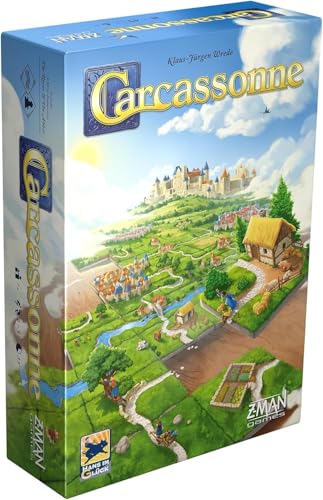
Carcassonne Board Game - Classic Tile Placement Strategy, Medieval Adventure for Adults & Families, Adult Board Games, Family Fun, Kids 8-12, 2-5 Players Ages 7+, 35 Minute Playtime
$31.99observed
Lowest we have recorded: $23.99 on (18 weekly checks)

Ticket to Ride Board Game - A Cross-Country Train Adventure for Friends and Family! Strategy Game for Kids & Adults, Ages 8+, 2-5 Players, 30-60 Minute Playtime, Made by Days of Wonder
$44.99observed
Lowest we have recorded: $39.47 on (14 weekly checks)
Specs head to head
| Spec | Carcassonne | Ticket to Ride |
|---|---|---|
| Players | 2 to 5 | 2 to 5 |
| Type | Tile placement strategy | Route-building strategy |
| Publisher | Z-Man Games | Days of Wonder |
Our take on each
Carcassonne
Best for: New gamers and relaxed family nights
Carcassonne is the standard answer for someone who insists they do not like board games. It is also the cheapest pick here, which makes it an easy first purchase, and it comes with real pedigree: a 2001 Spiel des Jahres winner that has stayed a genre cornerstone for over two decades.
The loop is simple. Draw a tile, place it to extend cities, roads, and fields, then drop a meeple to claim whatever you build, and that simplicity hides a surprising amount of strategy once you start contesting territory with other players. Because the tiles come out randomly, the map is different every session, so it never plays out the same way twice.
It works for kids age 7 and up but still gives adults plenty to scheme over, which is a rare combination. The tradeoffs are minor: it has a calmer pace than a party game, and farm scoring is the one rule that reliably confuses a first-time player. It is the best two-player game of the three, and BoardGameGeek's community poll names two as its best count.
Ticket to Ride
Best for: Family game night with a competitive streak
Ticket to Ride turns a railway map of North America into a fast, friendly race, and it has the record to back its reputation: the 2004 Spiel des Jahres, and a run as the game most often named as the on-ramp to the modern hobby.
You collect colored train cards and spend them to claim routes between cities, scoring more points for the longer hauls, and the real tension comes from racing a rival to grab a route before they block it outright. The rules click in minutes, but the choices stay genuinely interesting turn after turn, which is why it works so well for mixed-age tables.
The one friction point is that route blocking can frustrate younger kids who invested in a plan that suddenly will not work. It also costs more than an entry-level box like Carcassonne. Neither is a serious knock against a game this reliably fun.
More from this guide
We may earn a commission from qualifying purchases made through links on this page, at no extra cost to you. Commissions never change our picks.