Sony MDR7506 Professional Large Diaphragm Headphone
Three decades in real studios have proven the MDR7506 is the cheapest pair of ears you can actually trust.
- Driver
- 40mm dynamic
- Back type
- Closed back
- Impedance
- 63 ohms
- Sensitivity
- 106 dB
Updated 2026-06-23
How we pick: we research the specs, read real owner reviews, and weigh the honest trade-offs. Real pros and cons, no paid placements, and commissions never change our rankings.
Studio headphones are not about flattering your music. They are about hearing it honestly, so the mix you make at home still sounds right in a car, on a phone, and in someone else's earbuds. The three picks below have survived decades of real studio use for a reason: they tell you the truth and they take a beating.
We kept the focus on value, not flex. You do not need to spend hundreds to get a reference you can trust. Each pick is a different shape of honest sound, from a closed-back classic for tracking to an open-back set for mixing, so match the tier to how and where you actually work.
Best for: The all-rounder who wants one closed-back pair for monitoring, casual listening, and the road.
It fixes the MDR7506's worst habit (the fixed cable) and adds a fuller, more liveable sound, which is why it became the default recommendation.
I keep a pair of MDR7506 on a hook by my desk because they are the ones I grab without thinking. The ATH-M50x is what I actually wear for long edits, since the detachable cable means a snag is a swap and not a funeral. The DT 990 Pro only comes out when I am mixing and want to hear everything, including the mistakes.
If you track or record in the same room as a mic, go closed-back (the Sony or the Audio-Technica). If you mix in a quiet room and want the widest, most revealing sound, the open-back DT 990 is the one.
Studio headphones are tools, not toys. You want to hear what is actually in the recording, warts and all, not a flattering version. A few things decide which pair fits your work:
Buy for the job: closed for recording and reference, open for long mixing sessions in a quiet room.

Three decades in real studios have proven the MDR7506 is the cheapest pair of ears you can actually trust.

It fixes the MDR7506's worst habit (the fixed cable) and adds a fuller, more liveable sound, which is why it became the default recommendation.

For serious mixing, its wide open soundstage and revealing treble let you hear into a track in a way closed cans simply cannot.
Currently unavailable

$113.00
Best for: Tracking, podcasting, and anyone who wants a bulletproof closed-back reference for not much money.
The Sony MDR7506 is the headphone you see clamped to engineers in half the studio photos ever taken, and that reputation is earned. It is a closed-back workhorse with a detailed, slightly bright tuning that pushes vocals and high-end forward, which makes it great for catching sibilance, edits, and noise you would otherwise miss.
It is not a fun-listening headphone and it is not trying to be. The bass is present but lean, and that forward treble can get fatiguing over long sessions. What you get instead is consistency you can mix against at a price that is hard to argue with.
Build is light and foldable, but the cable is the catch: a long coiled cable that is permanently attached, so a snag can mean a repair instead of a swap. The faux-leather pads also flake after a year or two. Both are cheap, known quirks, not dealbreakers.
| Driver | 40mm dynamic |
| Back type | Closed back |
| Impedance | 63 ohms |
| Sensitivity | 106 dB |
| Frequency response | 10 Hz to 20,000 Hz |
| Detachable cable | No (fixed coiled cable, approx 3m) |
| Pads | Faux leather, replaceable (third-party) |
| Weight | Approx 230g (without cable) |
| Sound signature | Bright, mid-forward, fairly neutral |
| Approximate street price | Approximately 90 to 110 USD |

$159.00
Best for: The all-rounder who wants one closed-back pair for monitoring, casual listening, and the road.
The Audio-Technica ATH-M50x is the headphone most people land on when they ask for studio headphones, and it deserves the spot. Big 45mm drivers give it a fuller, punchier sound than the Sony, with stronger low end that still stays controlled enough to mix on, plus a clean, detailed top end.
The headline upgrade is practical: three detachable cables (coiled, long straight, short straight) that lock in with a twist. A worn or snagged cable is a swap, not a repair. The closed-back cups isolate well and fold up for travel, and they pull double duty as everyday headphones better than most studio cans.
The tradeoffs are real. Clamp force is tight out of the box and can pinch on bigger heads until broken in, and the slightly scooped, bass-leaning tuning is a touch less neutral than a purist mixing reference. For most people, that balance is the sweet spot.
| Driver | 45mm dynamic |
| Back type | Closed back |
| Impedance | 38 ohms |
| Sensitivity | 99 dB |
| Frequency response | 15 Hz to 28,000 Hz |
| Detachable cable | Yes (coiled, 3m straight, 1.2m straight included) |
| Pads | Faux leather, replaceable |
| Weight | Approx 285g (without cable) |
| Sound signature | Slightly V-shaped, punchy, detailed |
| Approximate street price | Approximately 130 to 160 USD |

Currently unavailable
Best for: Mixing and mastering at a desk, where soundstage and detail matter more than isolation.
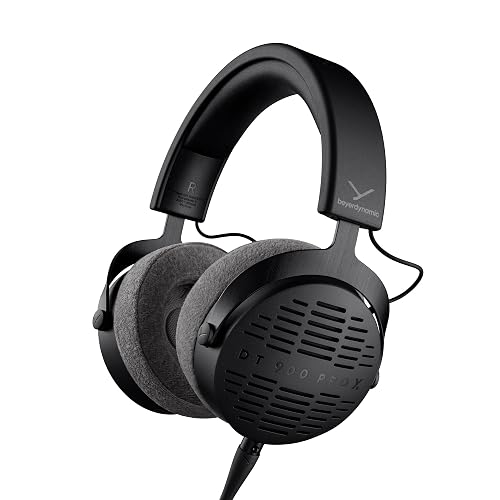
The beyerdynamic DT 990 PRO is where this list stops compromising. As an open-back design, it trades isolation for an airy, spacious soundstage that makes instrument placement and reverb tails far easier to judge. Detail retrieval is excellent, and a deliberate treble lift drags artifacts, harshness, and edits right out into the open.
That same bright tuning is the main caveat. The treble is genuinely sharp, and on poorly recorded material it can sting, so it rewards careful tracks and can punish bad ones. The plush velour pads and sprung headband, on the other hand, make it one of the most comfortable headphones you can wear all day.
Two things to plan for: the open back leaks sound in both directions, so it is a quiet-room tool, not an office or tracking headphone. And the 250 ohm version really wants a proper headphone amp or interface to open up. The cable is fixed and coiled.
| Driver | Dynamic, open back |
| Back type | Open back |
| Impedance | 250 ohms |
| Sensitivity | 96 dB |
| Frequency response | 5 Hz to 35,000 Hz |
| Detachable cable | No (fixed coiled cable, approx 3m, with 6.3mm adapter) |
| Pads | Grey velour, replaceable |
| Weight | Approx 250g (without cable) |
| Sound signature | Bright, airy, wide soundstage |
| Approximate street price | Approximately 130 to 170 USD |
Studio headphones aim for a flat, honest sound so you hear a recording accurately, flaws and all. Consumer headphones usually boost bass and treble to sound exciting. You want flat for mixing and editing.
Use closed-back (Sony MDR7506, ATH-M50x) for tracking and noisy rooms, since they isolate and do not leak into a mic. Use open-back (DT 990 Pro) for mixing in a quiet room, where the wider soundstage helps.
The Sony and Audio-Technica run fine from a laptop or interface. The DT 990 Pro 250 ohm version really wants a dedicated amp or a decent audio interface to sound its best.
They are strong all-rounders, but the tuning is slightly bass-forward rather than dead neutral. Great for monitoring and listening. For critical mixing, many prefer a flatter open-back like the DT 990.
Yes. The M50x doubles as an everyday closed-back, and the open DT 990 is excellent for immersive gaming in a quiet room.
We may earn a commission from qualifying purchases made through links on this page, at no extra cost to you. We only recommend products we would tell a friend to buy, and commissions never change our picks.